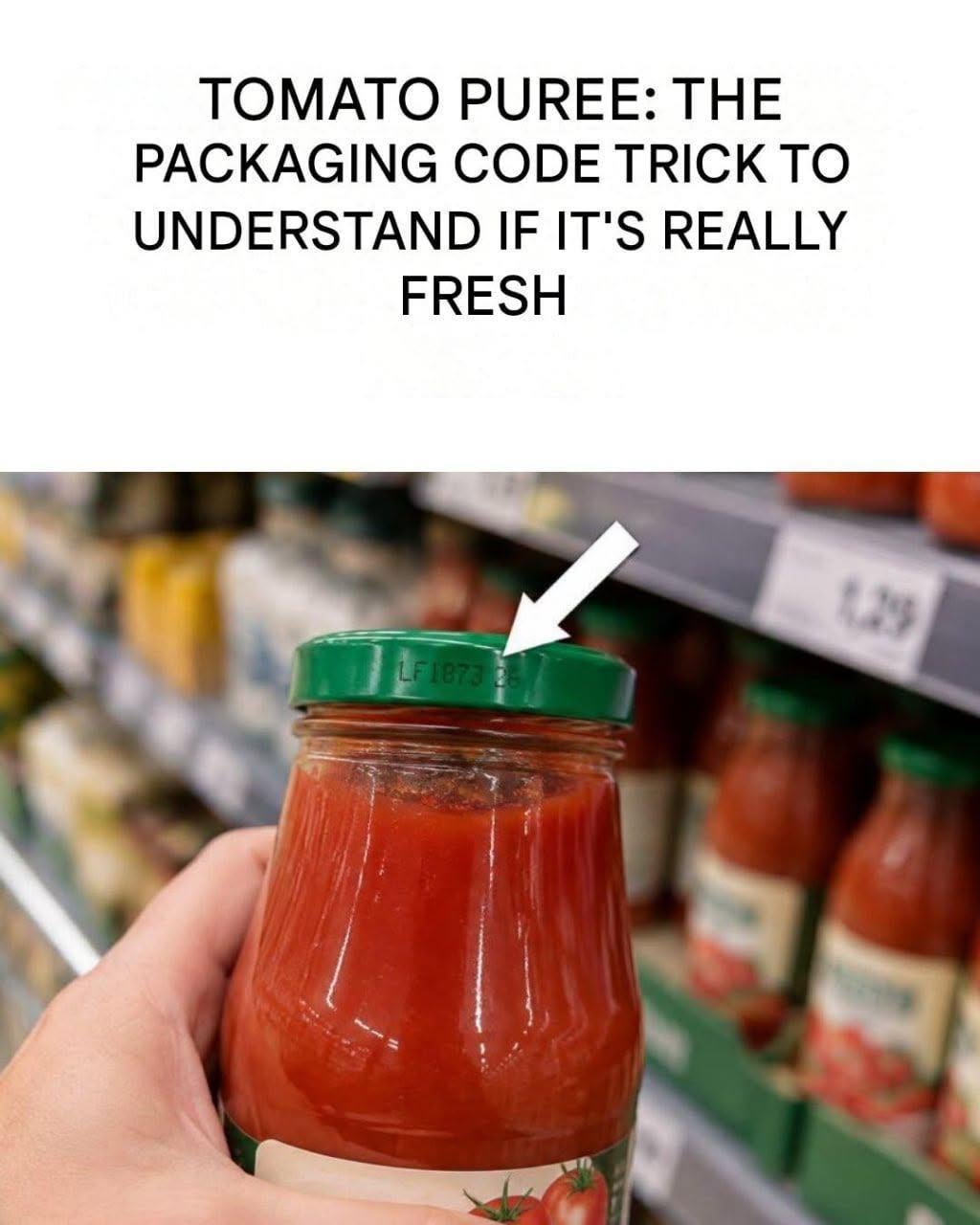
How do you know if the tomato purée you’re buying is fresh? Here’s what the code on the packaging means and what to look for before buying it.
Homemade tomato purée remains one of the most beloved traditions of Italian cuisine, but even commercially produced versions can offer good results if chosen carefully.
However, not all bottles or jars of tomato purée reach store shelves at the same time. To better understand when a product was made, it can be helpful to look at certain details on the packaging, including a small identification code used by manufacturers for traceability.The Code on the Package: What Does It Really Mean?
Tomato purée packaging may display a code related to production or batch traceability.
This type of information is mainly used by manufacturers to identify a particular batch and trace details about its processing.
In some cases, the code or batch number can provide information about the period in which the tomato purée was produced.
It is important to remember, however, that there is no single universal code that applies to all brands. Each manufacturer may use a different coding system.
The Production Date Is Different From the Expiration Date
One of the most common mistakes is to look only at the expiration date.
A tomato purée with a long shelf life does not necessarily mean it was produced recently. Conversely, a properly processed and stored product can retain its quality for a considerable period.
When evaluating “freshness,” it is important to distinguish between:
Production date
Production batch
Best-before or expiration date
These are different pieces of information that tell you different things about the product.
The Freshest Purée Is Often the One From the Tomato Season
Tomatoes intended for industrial processing are generally harvested during specific periods of the year, particularly in summer.
Purées made from tomatoes harvested during the most recent processing season are therefore more likely to have been produced recently.
This does not mean that an older product is necessarily of poor quality. If it has been processed and stored correctly, it can retain good quality for a long time.
