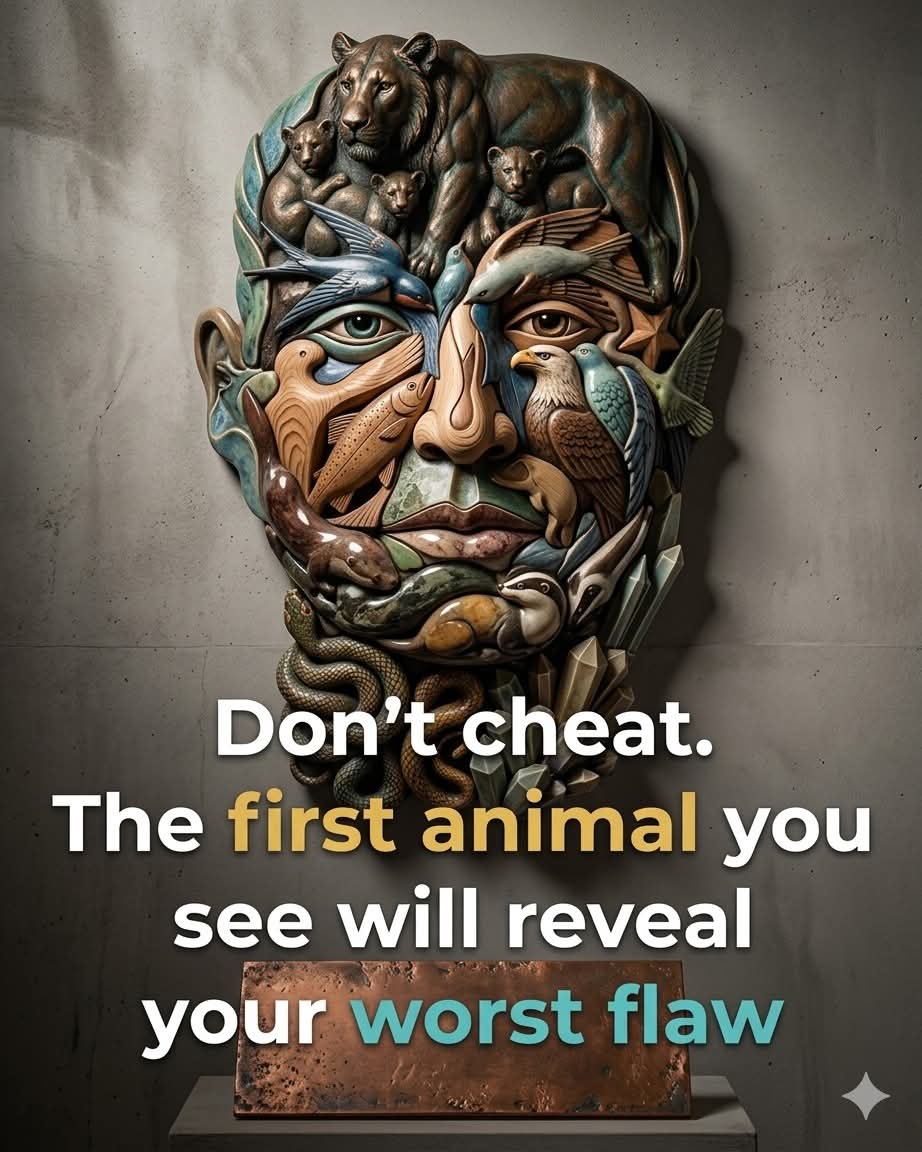
Dolphin: “Your flaw: People-pleasing. You prioritize harmony over your own needs. Gift: Compassion and social grace.”
Important: These interpretations are not scientifically validated. They’re creative storytelling designed to feel personal (a psychological phenomenon called the Barnum effect—where vague statements feel uniquely true) .
Why These Tests Feel So Compelling (The Real Psychology)
Even though animal quizzes aren’t real assessments, they tap into genuine human needs:
✨ The desire for self-knowledge: We all want to understand our patterns. Naming a “flaw” can feel like the first step toward growth .
✨ The comfort of categorization: Humans love sorting ourselves into types. It reduces uncertainty and creates a sense of identity .
✨ The Barnum effect: Vague, positive statements (“You sometimes worry too much”) feel personal because they apply to almost everyone .
✨ Social connection: Sharing results creates conversation and belonging—”I saw the fox too!” .
These aren’t flaws in us—they’re features of how our brains work. And that’s beautifully human.
What Actual Psychology Says About “Personality Flaws”
Real personality science is more nuanced—and more hopeful—than viral quizzes suggest.
🔹 Personality isn’t about “flaws”—it’s about patterns
Psychologists study traits (like the Big Five: openness, conscientiousness, extraversion, agreeableness, neuroticism) as spectrums, not defects . What feels like a “flaw” in one context may be a strength in another:
- “Overthinking” → Deep analysis and careful planning
- “Stubbornness” → Perseverance and conviction
- “People-pleasing” → Empathy and teamwork
🔹 Self-awareness is a skill, not a label
Research shows that people who practice non-judgmental self-observation—noticing patterns without shame—grow more than those who fixate on “fixing flaws” .
🔹 Growth happens through compassion, not criticism
Studies in self-compassion (pioneered by Dr. Kristin Neff) show that treating ourselves with kindness during struggle leads to more resilience than self-criticism .
A Gentler Way to Explore Your Patterns (If You’re Curious)
If you enjoyed the animal quiz and want to go deeper, try these evidence-informed reflections instead:
🌿 Ask better questions: Instead of “What’s my flaw?” try:
- “When do I feel most drained in relationships?”
- “What pattern shows up when I’m stressed?”
- “What strength am I overusing right now?”
🌿 Notice without judging: Keep a simple journal for one week. Write one sentence daily: “Today I noticed I…” No evaluation—just observation.
🌿 Seek feedback gently: Ask a trusted friend: “What’s one thing I do that helps you? One thing that’s challenging?” Listen with curiosity, not defense.
