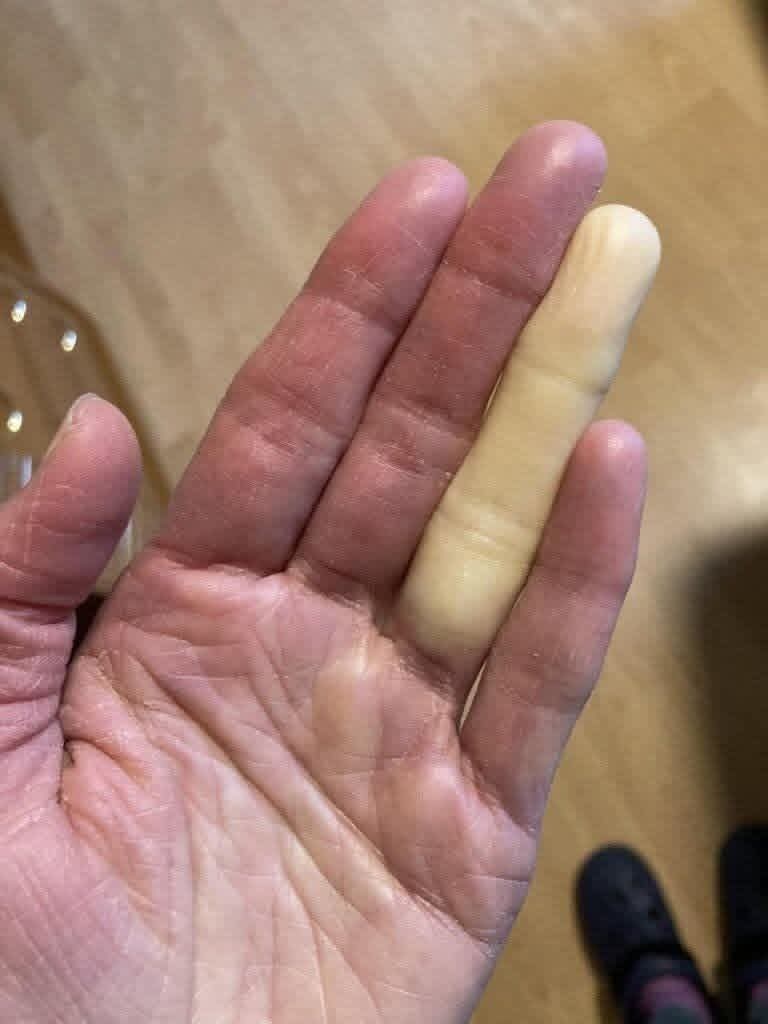
The image before us is striking, perhaps even alarming, showcasing a hand where one finger stands in stark, almost waxy contrast to its neighbors. While the surrounding digits appear a normal, healthy pinkish-red, this single middle finger is an unnatural, creamy yellow-white. This visually dramatic phenomenon is the hallmark of a specific medical condition, most commonly Raynaud’s phenomenon.
What Is Raynaud’s Phenomenon?
Raynaud’s is a disorder that affects the blood vessels, primarily in the fingers and toes, though it can also affect the nose, ears, and lips. It is characterized by episodes of vasospasm—a temporary narrowing of the blood vessels—which limits blood flow.
The characteristic color changes, vividly captured in this photograph, typically follow a distinct pattern as the episode progresses:
- Pallor (White): The initial stage, shown here. The lack of blood flow due to the vasospasm causes the area to turn white, sometimes described as waxy or ghost-like. This is often accompanied by a feeling of coldness and numbness.
- Cyanosis (Blue): As oxygen is depleted from the limited blood supply still present, the affected area may turn blue.
- Rubor (Red): When the attack subsides, blood flow is restored (reperfusion). This rush of blood causes the area to turn red, often accompanied by throbbing, tingling, or swelling.
The Trigger: Cold and Stress
These attacks are most often triggered by exposure to cold temperatures—even just reaching into a freezer or experiencing a sudden temperature drop. Emotional stress can also be a significant factor. For those with Raynaud’s, the body’s over-reaction to these triggers constricts the small arteries that supply blood to the skin, causing the symptoms we see.
Primary vs. Secondary Raynaud’s
There are two main forms of the condition:
- Primary Raynaud’s (Raynaud’s Disease): This is the more common and generally milder form. It is often a standalone condition, not caused by an underlying medical problem. It usually begins between the ages of 15 and 30 and is more common in women.
- Secondary Raynaud’s (Raynaud’s Phenomenon): This form is more complex and less common, caused by an underlying disease, injury, or medication. It is frequently associated with autoimmune or connective tissue diseases like scleroderma, lupus, and rheumatoid arthritis. This form tends to be more severe and can sometimes lead to complications like skin ulcers if blood flow is significantly and repeatedly compromised.
Living with the Color Shift
While a single pale finger can look startling, Raynaud’s is often a manageable condition. Treatment focuses on minimizing triggers and, in more severe cases, using medications to dilate blood vessels.
Key management strategies include:
- Keeping Warm: Wearing layers, especially gloves, mittens, and warm socks, even in slightly cool conditions.
- Warming Up Quickly: If an attack starts, placing hands under warm (not hot) running water or moving to a warmer environment.
- Avoiding Triggers: Limiting exposure to cold and managing stress levels.
- Lifestyle Changes: Quitting smoking (nicotine constricts blood vessels) and avoiding certain vasoconstrictive medications.
The photograph serves as a powerful visual reminder of the body’s intricate, delicate systems and how seemingly simple changes in temperature can dramatically alter the landscape of the skin. It highlights the often-unseen struggles of those navigating life with Raynaud’s, emphasizing the importance of staying warm and protecting one’s hands.
