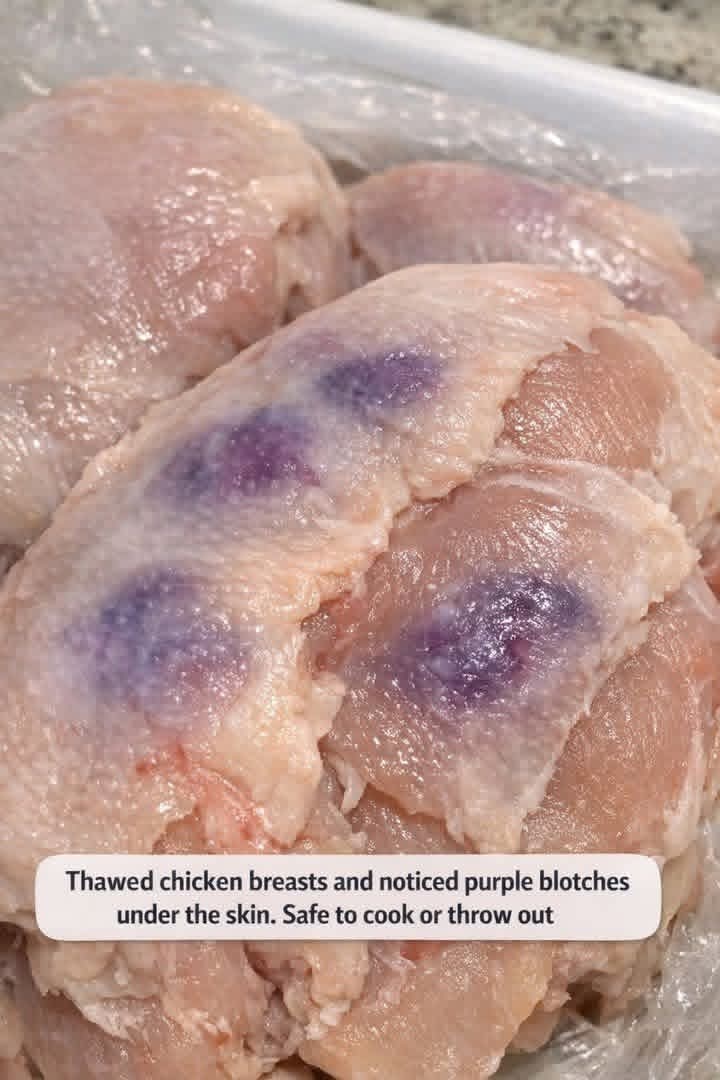
2. Bone Marrow Leakage: The Common Culprit Behind the Discoloration
One of the most common reasons for purple blotches on chicken is bone marrow leakage. During the freezing process, ice crystals can form and puncture cells, causing the marrow to seep out and stain surrounding tissues. This is especially common in younger chickens, whose bones are more porous.
As the chicken thaws, the blood pigment from the marrow can spread, creating a purplish or reddish tint on the meat. While this can be visually unappealing, it is generally harmless and does not affect the safety or taste of the chicken, provided that it has been stored and handled correctly.
3. How to Tell Normal Purple Patches From True Spoilage
Distinguishing between harmless discoloration and signs of spoilage is crucial for food safety. Normal purple patches caused by myoglobin or bone marrow leakage are usually localized and retain a fresh smell. Spoiled chicken, on the other hand, often exhibits a sour or rancid odor, a slimy texture, and an overall dull color.
When assessing chicken, pay close attention to any areas that seem off. Spoilage signs typically accompany other indicators like a sticky or tacky feel. If the discoloration is accompanied by these signs, it’s best to err on the side of caution and discard the chicken.
