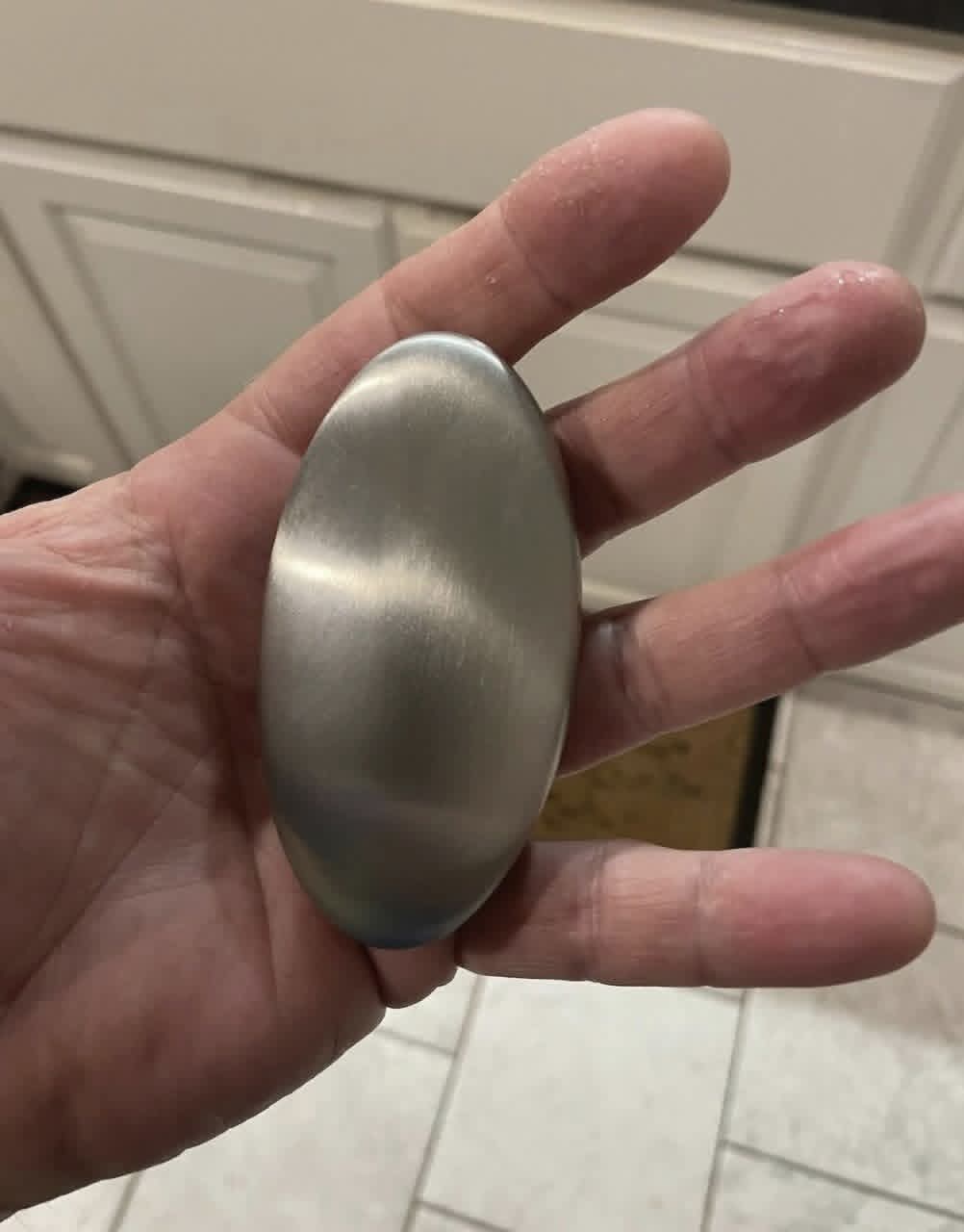
Pro tip: Keep the steel bar clean and dry between uses. Wash with soap occasionally to remove residue.
What to Look For (Not All “Steel Soaps” Are Equal)
Feature
Why It Matters
100% stainless steel (no coatings)
Coatings prevent the redox reaction—must be bare metal
Ergonomic shape (oval, grooved)
Easier to grip and rub than a plain spoon/fork
Holder included
Keeps it dry and accessible by the sink
Budget hack: No special bar? Rub hands on the side of a stainless steel sink, a spoon, or faucet—same chemistry!
Myths Debunked
Myth
Reality
“It’s just placebo effect”
Lab studies confirm the chemical reaction occurs
“Any metal works”
Only stainless steel (iron + chromium) creates the right reaction. Aluminum/copper won’t work.
“It replaces handwashing”
Always wash with soap first—steel only targets sulfur odors, not bacteria/grease
Eco-Friendly Bonus
Zero waste: Lasts decades—no plastic bottles or refills
Chemical-free: No synthetic fragrances or harsh scrubbers
Cost-effective: One-time purchase vs. endless soap refills
Final Thought: Simple Science, Real Results
That little steel bar isn’t magic—it’s clever chemistry. And in a world of complicated solutions, it’s refreshing to have a tool that’s as simple as rubbing your hands on metal under running water.
So next time garlic lingers on your fingers, skip the lemon juice or coffee grounds. Reach for the steel. Your nose (and dinner guests) will thank you.
“The best solutions aren’t always the fanciest. Sometimes, they’re just stainless steel and running water.”
Have a steel soap bar? Share your favorite brand—or your DIY hack (spoon, sink, faucet?) below!
