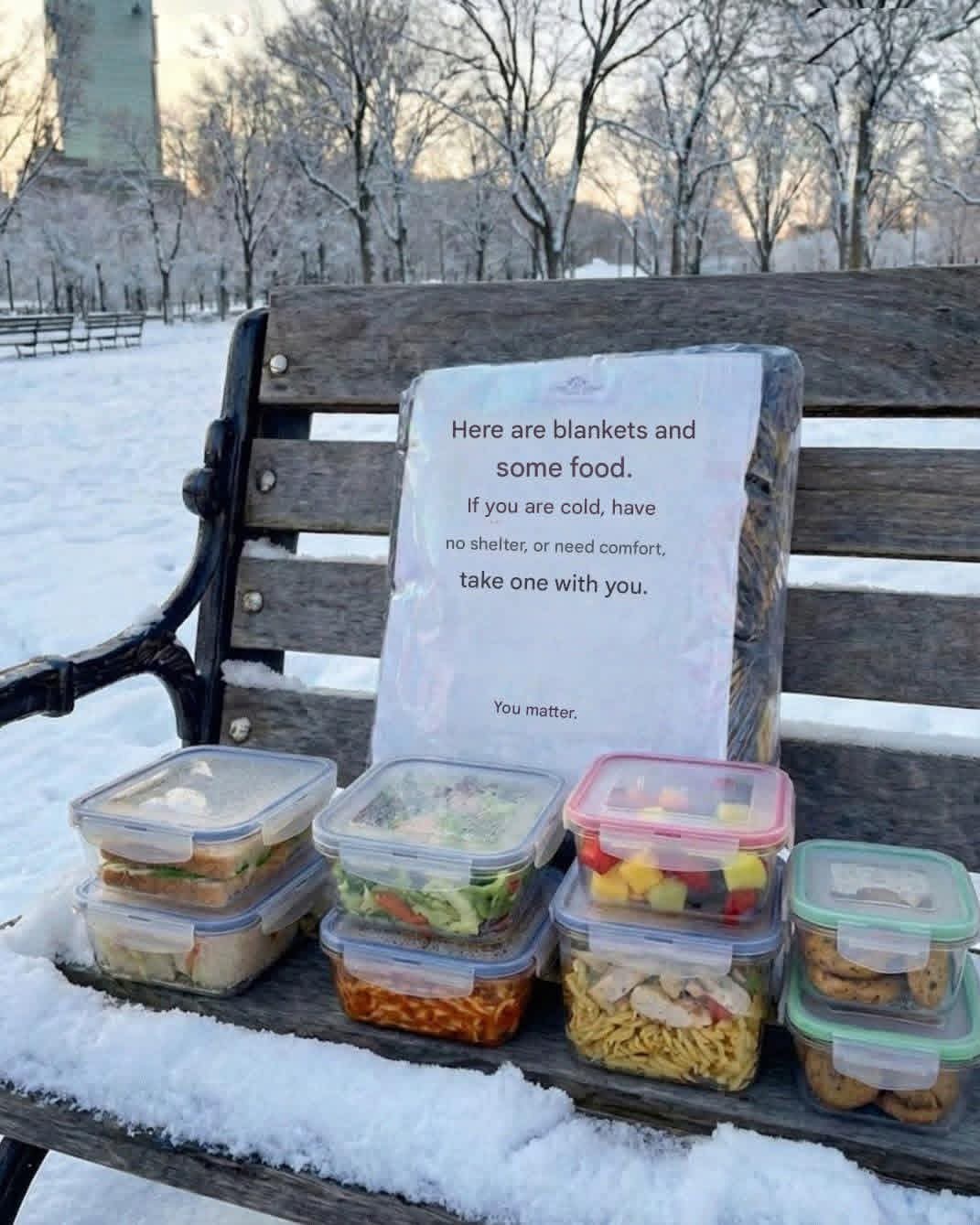
Ethan blinked, trying to process the words.
“My father wasn’t always homeless,” Charles continued, his voice thick with emotion. “He was a successful philanthropist who donated millions to shelters, hospitals, and schools. But five years ago, his caregiver betrayed him. She stole his money, his IDs, his medical records, everything. She left him with nothing, and because he suffered from early-stage dementia, he couldn’t prove who he was. The system failed him. He ended up on the streets with no way to get help.”
Ethan felt a lump in his throat. He thought of the old man’s kind eyes, of how he always nodded gratefully when Ethan left the blankets.
“My family searched for him for years,” Charles said quietly. “We hired investigators, filed police reports, and posted fliers. We never stopped searching. Until three weeks ago, the police finally found him. He had collapsed in a park, and someone called an ambulance. They were able to identify him thanks to old dental records.”
Tears welled up in Charles’s eyes. “But by the time we got to the hospital, it was too late. He died the next day.”
Ethan’s chest hurt. “I’m so sorry.”
Charles nodded, wiping his eyes with the back of his hand. “When the police recovered his belongings, they found a small notebook he was carrying. It was full of stories about you. He called you ‘the mysterious, good man.’ He wrote about every blanket and meal you left him. He wrote that you made him feel human again when the world had forgotten he existed.”
Ethan couldn’t hold back the tears any longer. They rolled down his cheeks as he covered his face with his hands.
Charles reached into his briefcase and pulled out several documents, then carefully placed them one by one on the table.
“My father left very specific instructions in his will,” Charles said. “He wrote, ‘Find the man who saved me. Give him the chance at life he gave me.’”
Ethan looked at the documents through blurry eyes. The deed to a house, fully paid for, in a good neighborhood with a garden. A cashier’s check with more zeros than Ethan had ever seen in his life. Legal documents establishing a scholarship fund for Nina, Ruby, and Sam, ensuring they could attend college debt-free.
And finally, a letter written in shaky handwriting, addressed to “The Man Who Saved Me.”
Ethan read this through tears.
You didn’t know me. You owed me nothing. But you saw me when no one else did. You gave me warmth when I was cold. You gave me food when I was hungry. And most importantly, you gave me hope when I had none. I want you to have what I can no longer use. Take care of your beautiful children. Live the life you deserve. Thank you for reminding me that kindness still exists.”
Ethan was sobbing openly now, his shoulders shaking. Nina, Ruby, and Sam ran to him, wrapping their little arms around their father. They didn’t understand what was happening, but they knew something important had changed.
Charles stood, smiling warmly despite the tears in his eyes. “My father wanted you to know that kindness is never wasted. It always finds its way back, sometimes when you need it most.”
Ethan looked at the lawyer, at his children, at the documents that depicted a future he no longer believed in. For the first time since Lily’s death, he felt hope.
It was real, solid, life-changing hope.
“Thank you,” Ethan whispered. “Thank you for finding me.”
Charles shook his hand firmly. “No, Ethan. Thank you for finding my father.”
In a world where ambition and success are rewarded, Ethan’s story reminds us that sometimes the smallest acts of compassion have the greatest power.
However, it is worth asking yourself: even if you had almost nothing, would you give something to someone who has less, or does generosity seem possible only when we have enough for ourselves?
