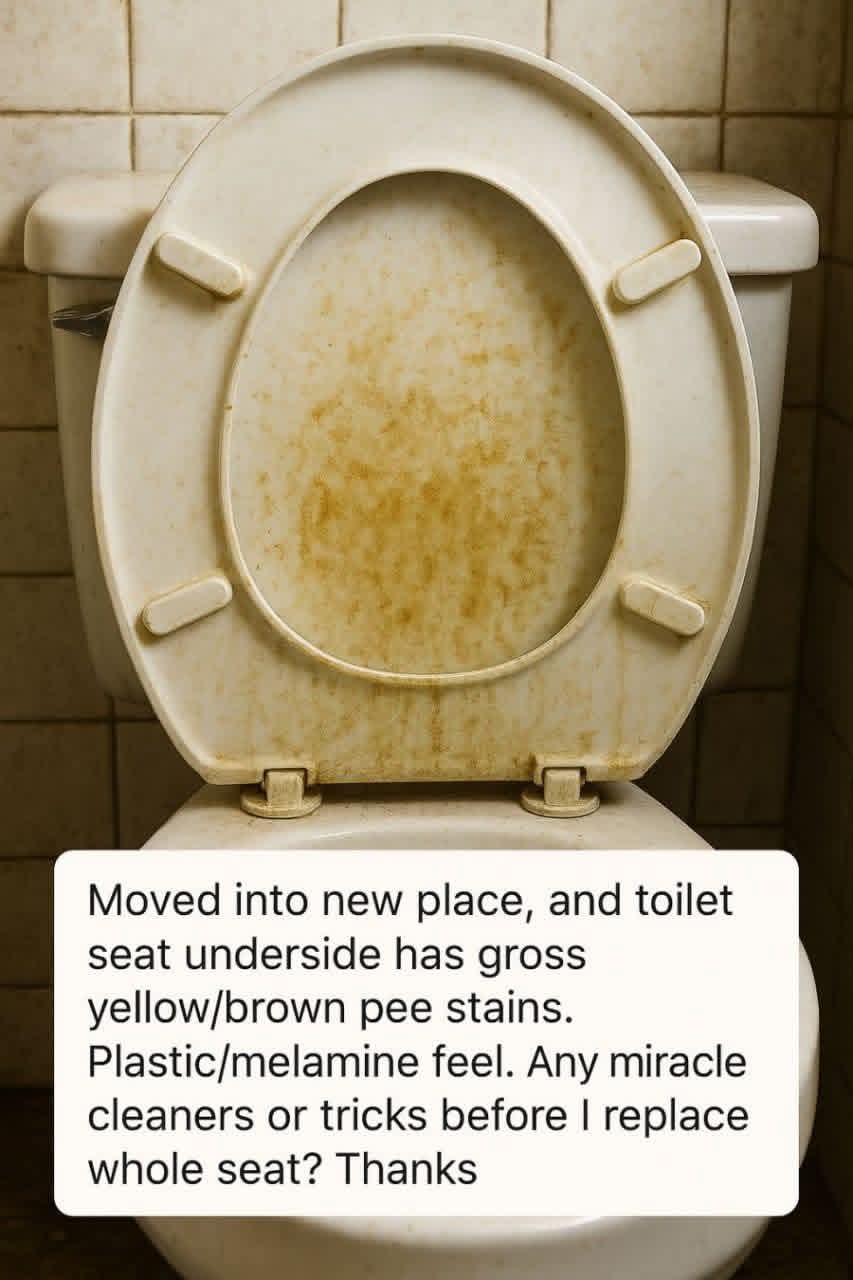
1. Why Toilet Seats Get Those Stubborn Yellow-Brown Stains
Toilet seats can develop yellow-brown stains primarily due to prolonged exposure to urine and hard water minerals. When urine dries on the surface of the seat, it can leave behind uric acid crystals that bond with the material, especially if it’s not cleaned regularly. Over time, this can result in discoloration that becomes more challenging to remove.
In addition to urine, mineral deposits from hard water can also contribute to staining. Hard water contains high levels of calcium and magnesium, which can build up on surfaces over time. In bathrooms, these minerals can react with soap scum and other residues, leading to stubborn stains. The texture of plastic and melamine materials can make them more susceptible to these types of stains, as they may have tiny pores or scratches where residue can accumulate.
2. When to Clean Versus When to Just Replace the Seat
Deciding whether to clean or replace a toilet seat often depends on the extent of the staining and the condition of the seat itself. If the seat is structurally sound and the stains are only surface-level, attempting to clean it first is a cost-effective approach. However, if the seat is cracked, heavily scratched, or if the stains are deeply etched and affect the seat’s appearance and hygiene, replacement might be the better option.
Consider the cost of a new seat compared to the time and effort involved in cleaning. A basic plastic seat can cost as little as $20, while higher-end models may be upwards of $50 or more. If cleaning doesn’t yield satisfactory results, investing in a new seat could be a worthwhile solution for both aesthetic and sanitary reasons.
3. Start Simple: Soap, Hot Water, and a Non-Scratch Scrub
Before diving into more intensive cleaning methods, start with the basics: mild dish soap, hot water, and a non-scratch scrub pad. This method is gentle yet effective for removing surface grime and light stains. Mix a few drops of dish soap in a bowl of hot water, soak the scrub pad, and gently scrub the underside of the toilet seat.
Make sure to rinse the seat thoroughly with clean water after scrubbing to remove any soap residue. This approach is not only safe for plastic and melamine surfaces but also environmentally friendly. If the stains persist, you can then move on to stronger cleaning solutions.
