10. Wine Pairing
- Cabernet Sauvignon: Bold and structured; complements rich beef.
- Merlot: Smooth and fruity; balances the fat.
- Syrah/Shiraz: Peppery notes enhance the seasoning.
- Non-alcoholic: Sparkling water with pomegranate or cranberry juice.
11. Storing and Reheating Leftovers
11.1 Storage
- Wrap tightly in foil or store in airtight containers.
- Refrigerate for 3–4 days or freeze up to 2 months.
11.2 Reheating
- Warm in the oven at 250°F (120°C) until heated through.
- Avoid microwaving large slices to prevent dryness.
- Add au jus or beef broth for moisture.
12. Common Mistakes to Avoid
- Skipping the resting period
- Under-seasoning
- Cooking straight from the refrigerator
- Overcooking
- Ignoring the thermometer
13. Frequently Asked Questions
Q: Can I cook prime rib on the grill?
Yes. Use indirect heat and monitor the temperature carefully. Finish with a high-heat sear for crust.
Q: How long does a 5-pound roast take?
At 325°F, approximately 15–20 minutes per pound for medium-rare. Always use a thermometer.
Q: Should I cover the roast while cooking?
No. Leave uncovered during roasting for proper browning. Tent only while resting.
Q: How can I enhance the flavor?
Apply a compound butter with garlic, rosemary, and thyme under the fat cap, or dry-brine overnight.
14. Elevating the Experience
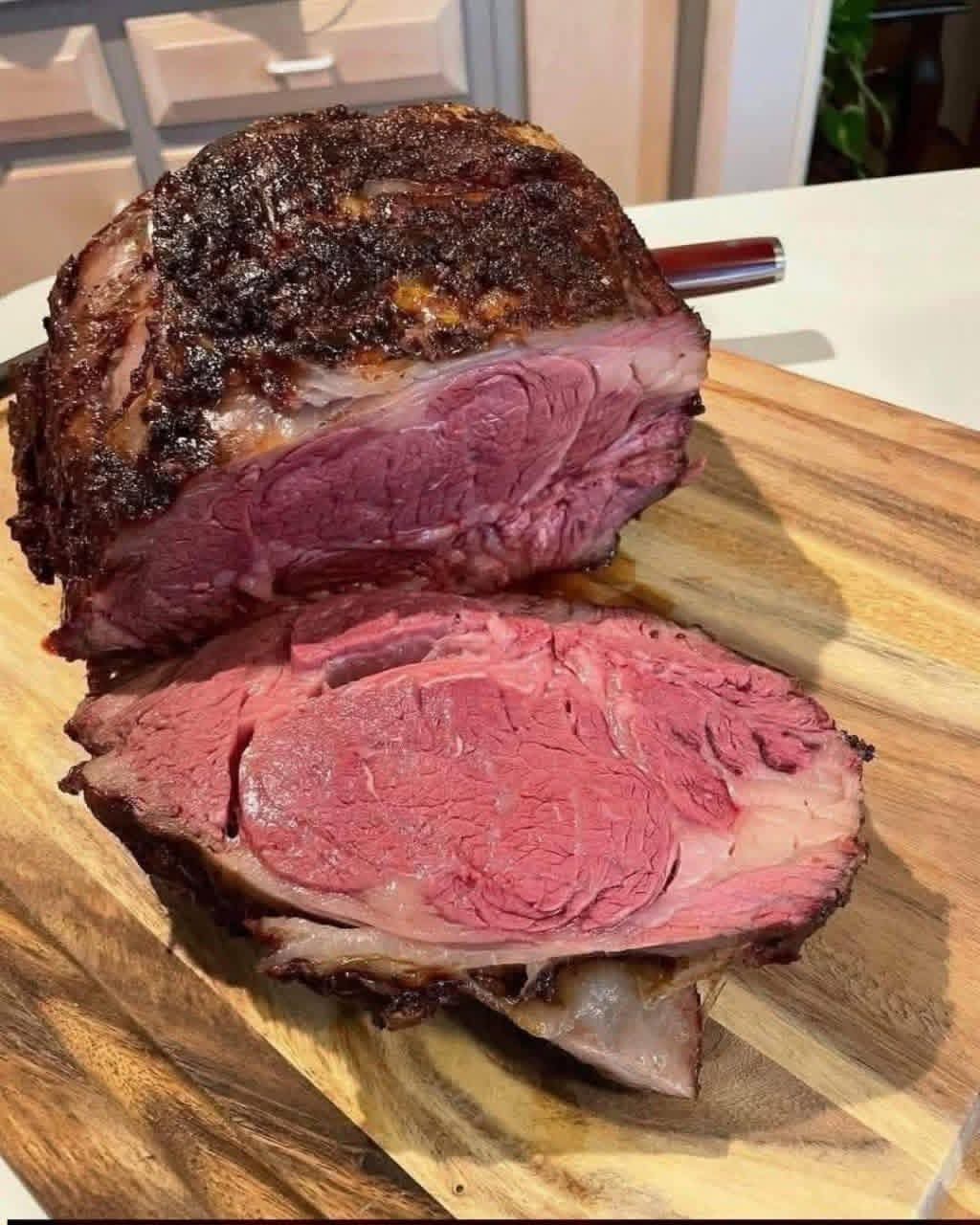
- Presentation: Serve on a wooden board with bones intact.
- Garnish: Fresh herbs, roasted garlic, or edible flowers.
- Interactive dining: Carve tableside for dramatic effect.
Conclusion
Cooking a prime rib roast is both an art and a science. With careful selection, proper seasoning, accurate temperature control, and adequate resting time, you can create a centerpiece that is tender, juicy, and deeply flavorful.
