Freezing
Freeze salmon at 0°F (-18°C).
Properly wrapped, it can last 2–3 months without significant quality loss.
Packaging
Keep salmon in airtight packaging to minimize exposure to air and prevent oxidation.
Vacuum-sealed salmon lasts longer than loosely wrapped fillets.
Part V: Risks of Eating Spoiled Salmon
Spoiled salmon can harbor harmful bacteria such as:
Salmonella
Listeria monocytogenes
Clostridium botulinum
Symptoms of foodborne illness include nausea, vomiting, diarrhea, fever, and abdominal cramps. In severe cases, hospitalization may be required.
Part VI: Culinary Context
Why Salmon Spoils Quickly
Compared to red meat, fish has shorter muscle fibers and higher water content, making it more susceptible to bacterial growth. Its unsaturated fats oxidize faster than saturated fats in beef or pork.
Cultural Practices
In Japan, salmon is often frozen immediately after catch to preserve freshness for sushi.
In Scandinavia, salmon is cured or smoked to extend shelf life.
In North America, fresh salmon is prized but requires careful handling.
Part VII: Preventing Yellow Stains
Buy Fresh: Choose salmon with bright color and firm texture.
Store Properly: Refrigerate immediately, consume quickly.
Freeze Early: If not eating within 2 days, freeze to preserve quality.
Avoid Cross-Contamination: Keep salmon separate from raw meats.
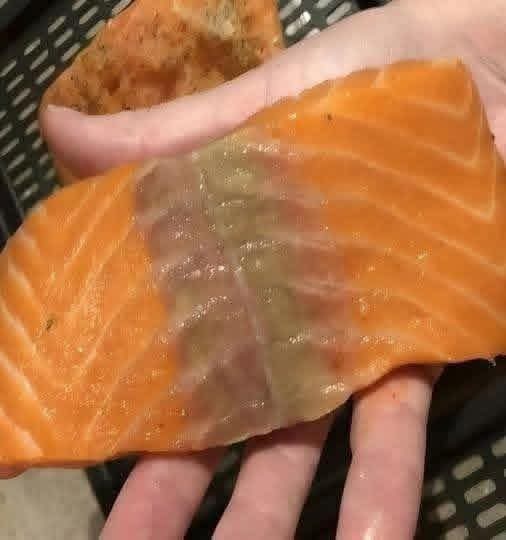
Part VIII: What To Do If You See Yellow Stains
Smell the Salmon: If odor is off, discard.
Check Texture: Slimy or mushy? Discard.
Evaluate Storage: If kept for a week in the fridge, discard.
When in Doubt: Err on the side of caution—better safe than sorry.
Part IX: Real-Life Kitchen Stories
Many home cooks share similar experiences:
