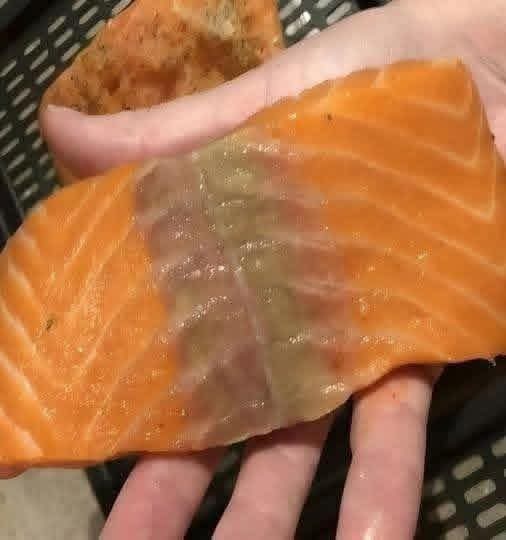
Impact: Oxidation doesn’t always mean spoilage, but it can affect flavor, making salmon taste rancid or “off.”
2. Spoilage and Bacterial Growth
If the yellow stain looks slimy or is accompanied by a foul odor, spoilage is likely. Bacteria thrive in moist, protein-rich environments like fish.
Signs: Sour smell, slimy texture, discoloration beyond yellow (gray or brown).
Impact: Spoiled salmon can cause foodborne illness and should never be consumed.
3. Fatty Tissue Separation
Salmon’s belly and skin contain concentrated fat deposits. Over time, these areas may develop a yellow tint as fat separates or oxidizes.
Impact: If the fish otherwise smells fresh and feels firm, it may still be safe, though flavor and texture could be compromised.
continued on the next page
Part III: How to Assess Salmon’s Freshness
The Smell Test
Fresh salmon: Clean, ocean-like aroma.
Spoiled salmon: Sour, ammonia-like, or overly “fishy” smell.
The Touch Test
Fresh salmon: Firm flesh that springs back when pressed.
Spoiled salmon: Slimy, sticky, or mushy texture.
The Visual Test
Fresh salmon: Vibrant pink or orange flesh, moist but not slimy.
Spoiled salmon: Dull color, yellow stains, or gray patches.
Part IV: Storage Guidelines
Refrigeration
Store salmon at 32–38°F (0–3°C).
Consume within 1–2 days of purchase for best quality.
