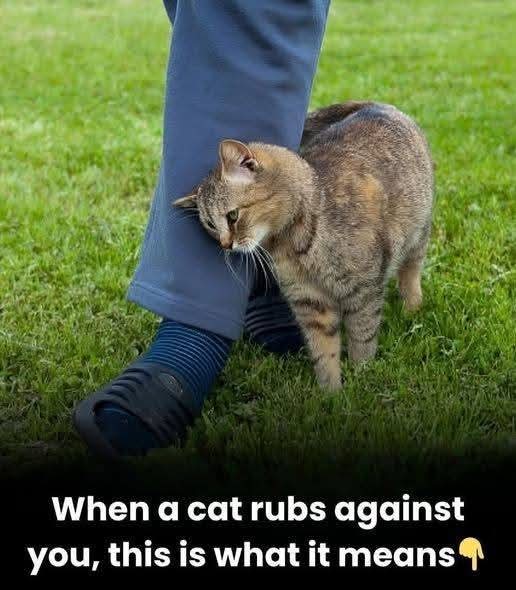
The Meaning Behind Bunting
When your cat brushes its face, body, or tail base against you, it’s sending signals. While often affectionate, bunting serves more than one purpose.
Cats have scent glands around their cheeks, forehead, and tail area. These glands release pheromones that help them claim territory and feel safe. When your cat rubs on you, it’s depositing its scent, creating a familiar environment—and marking you as “part of its world.”
Bunting is also a common greeting. According to Dr. Tomeshia Hubbard, DVM, a cat’s whiskers act like sensory tools during these interactions, helping them connect with people.
Because pheromone markings fade, cats “refresh” them often. This explains why they greet you with a rub as soon as you walk in the door—part affection, part re-marking their territory.
Greeting, Exploring, or Seeking Something?
Not all rubbing is meant to say “I love you.” Sometimes it’s simply curiosity. Cats use bunting to examine their surroundings, much like a child using touch to learn.
A few examples:
- Rubbing a cabinet may be a request for food.
- Rubbing a door could mean they want outside.
- Hard, repeated headbutts can hint at discomfort or a need for attention.
If you’re meeting a new cat, don’t assume rubbing means it wants to be pet—wait for other positive signals.
