5. How These Glass Electrodes Worked Inside Early Quack Medicine Devices
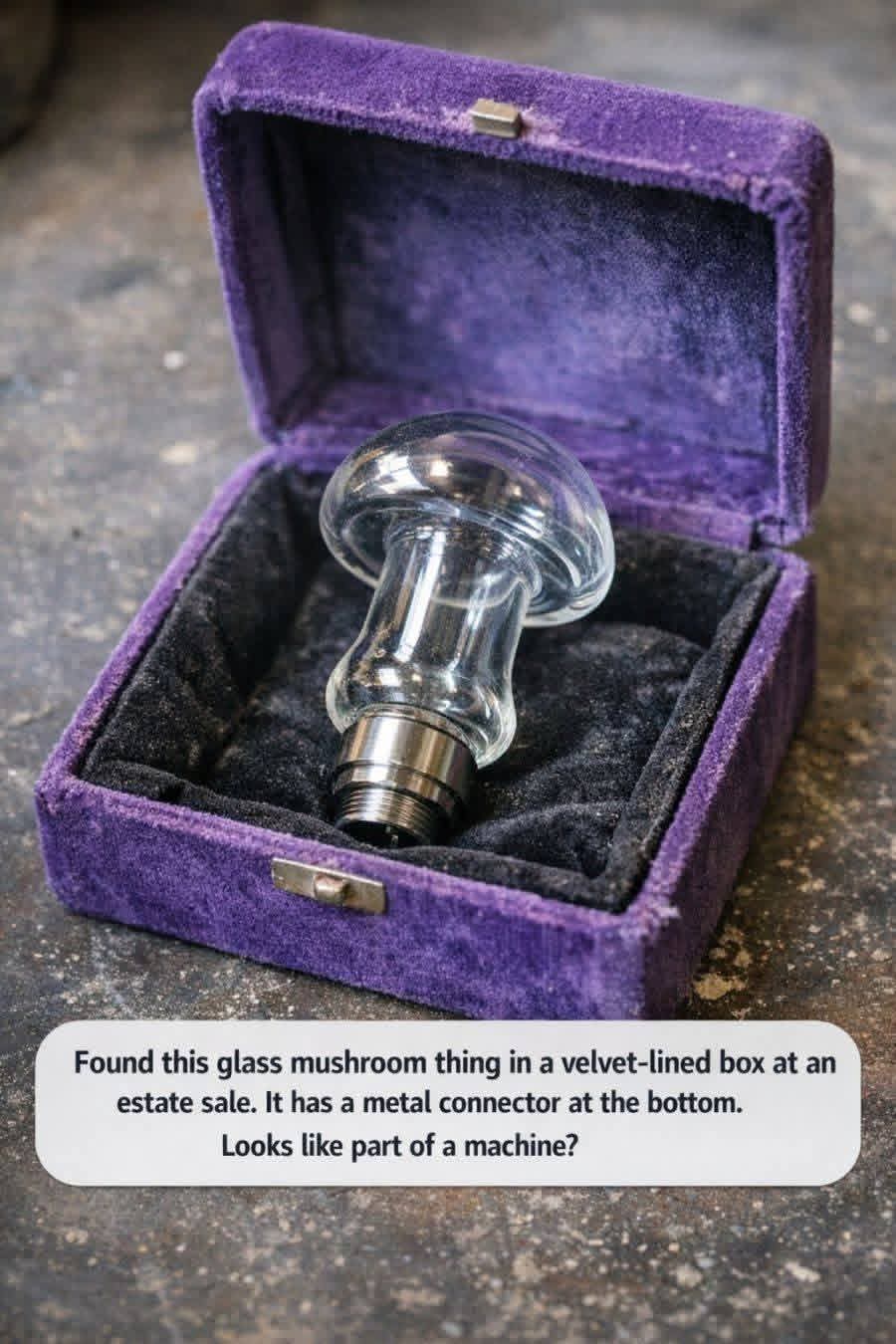
Violet ray machines operated by generating a high-voltage, low-amperage current, which was then transferred to the glass electrode via the metal connector. Once the electrical current entered the electrode, it would ionize the gas inside the glass, creating a violet glow and a soft buzzing sound.
The user would apply the glowing electrode to the skin, where the electrical discharge was believed to stimulate healing. Although there was little scientific evidence to support these claims, the devices gained a reputation for their supposed benefits, largely due to their novelty and the persuasive marketing of the time.
6. Common Electrode Shapes and Why the “Mushroom” Was So Popular
Violet ray electrodes came in an array of shapes, each designed for specific applications. Common shapes included combs for hair treatments, bulbs for general use, and, of course, mushrooms for larger areas. The mushroom shape was favored for its versatility, capable of covering broad sections of the body with ease.
The wide cap of the mushroom electrode allowed for a diffuse distribution of the electrical current, making it suitable for treating areas like the back or abdomen. Its ergonomic design also made it comfortable to use, which likely contributed to its popularity among violet ray enthusiasts.
