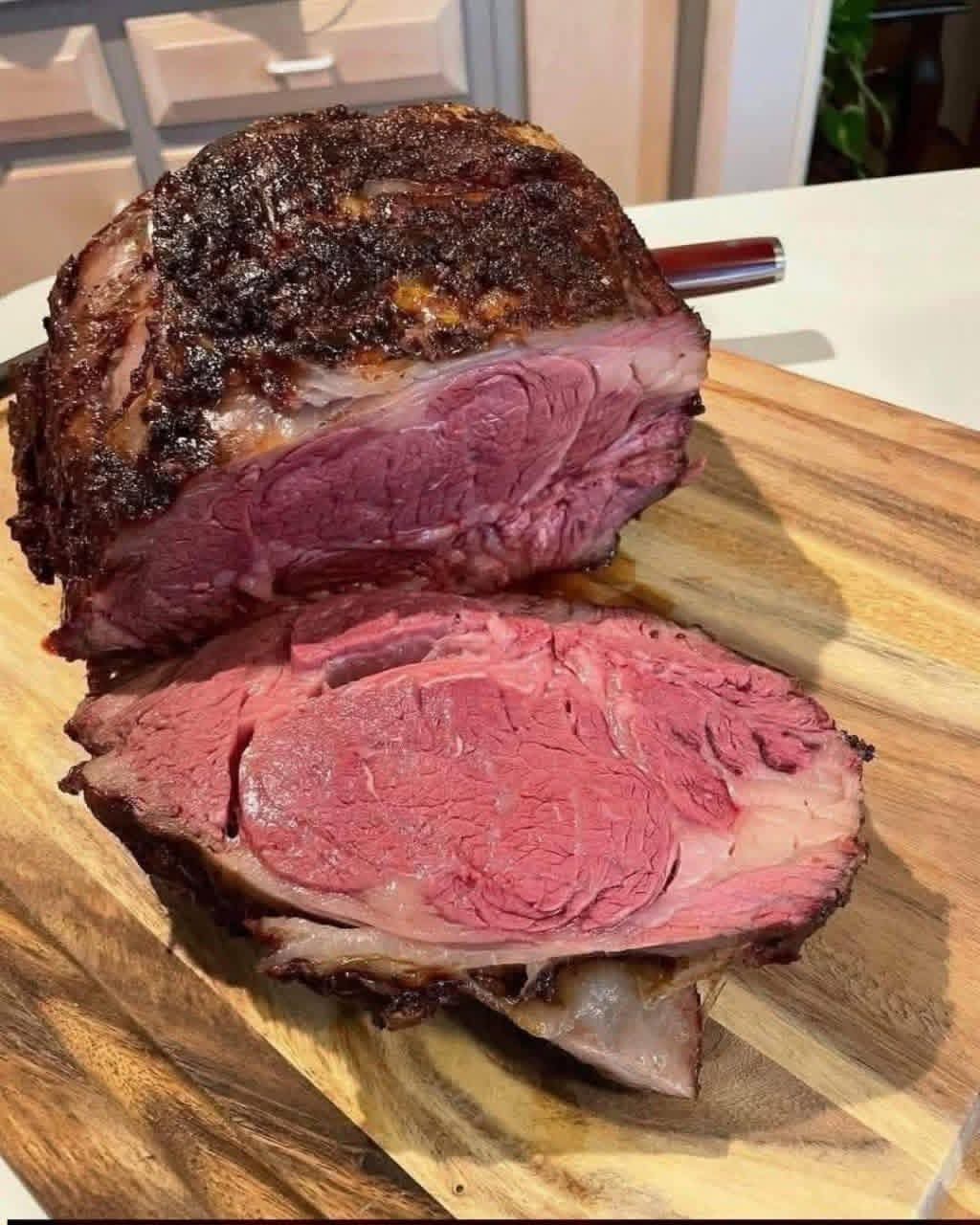
Few dishes are as impressive, indulgent, or satisfying as a prime rib roast. Celebrated for its marbling, tenderness, and deep, beefy flavor, prime rib often serves as the centerpiece of holiday feasts, special occasions, and celebratory dinners. A perfectly cooked roast is the result of thoughtful selection, proper seasoning, and precise cooking technique.
This guide walks you through every step—from choosing the right cut to carving and serving it with confidence.
1. Choosing the Right Prime Rib Roast
Selecting a high-quality roast is the foundation of an unforgettable meal.
1.1 USDA Grades
- Prime: The highest grade, heavily marbled, exceptionally tender, and richly flavored. Ideal for special occasions.
- Choice: Slightly less marbled but still excellent. Requires attentive cooking to maintain juiciness.
- Select: Leaner and less tender, typically more budget-friendly. Careful monitoring is essential to prevent dryness.
1.2 Bone-In vs. Boneless
- Bone-In (Standing Rib Roast): The bones enhance flavor, help retain moisture, and create a dramatic presentation. Usually 2–7 ribs.
- Boneless: Easier to carve and store. Cooks slightly faster and requires close attention to avoid overcooking.
1.3 Size
- Plan for 1 pound per person for generous portions.
- A 4–5 rib roast comfortably serves 6–8 guests.
1.4 Marbling
Look for visible streaks of white fat throughout the meat. Marbling is essential for flavor, juiciness, and tenderness.
2. Preparing the Prime Rib
2.1 Thawing
If frozen, thaw the roast completely in the refrigerator. Depending on size, this may take 24–48 hours.
Avoid thawing at room temperature, as this can lead to uneven cooking and potential bacterial growth.
2.2 Bringing to Room Temperature
Remove the roast from the refrigerator about 2 hours before cooking. This promotes even cooking from edge to center.
